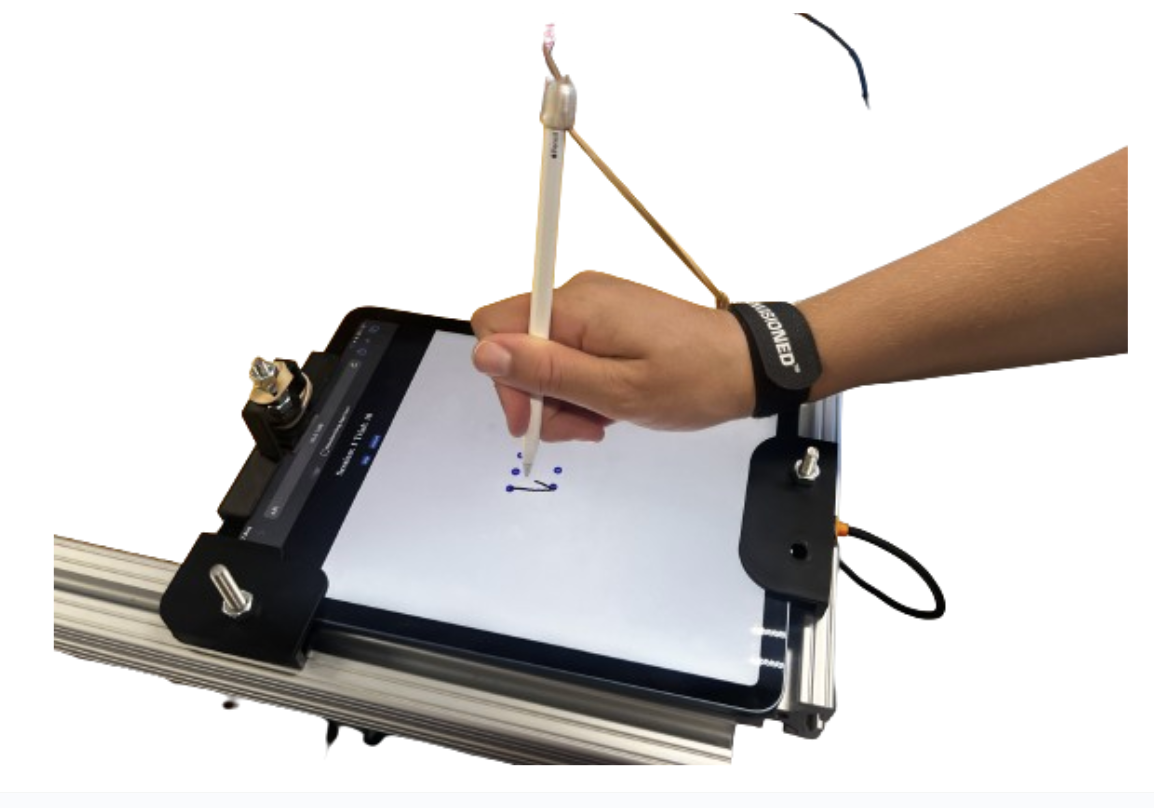
Goal & Constraints
Determine whether haptic feedback can correct handwriting in real time by translating a 2D pen position error into a clear, low-latency directional cue on the wrist. • Input: pen-to-target error (pixels) computed in an iPad web app, streamed over serial to an Arduino • Key constraint: cues must be readable on the wrist without watching the screen • Target user: children who struggle with handwriting
My Role
Hardware, firmware, web interface, and haptic patterns.
Design & CAD
• Passive — rubber band on the pen adds resistance • ERM — 3 MOSFET-switched motors on a separate battery; >50 px: 3 motors at 255 PWM, 10–50 px: 2, <10 px: 1 • Exciter — 19 mm coin exciter (Dayton DAEX19CT-4) via XY-502 amp; amplitude ∝ error^1.05 (Stevens' law) • LRA — 4 actuators at N/S/E/W on an I2C multiplexer, driven in timed sequences
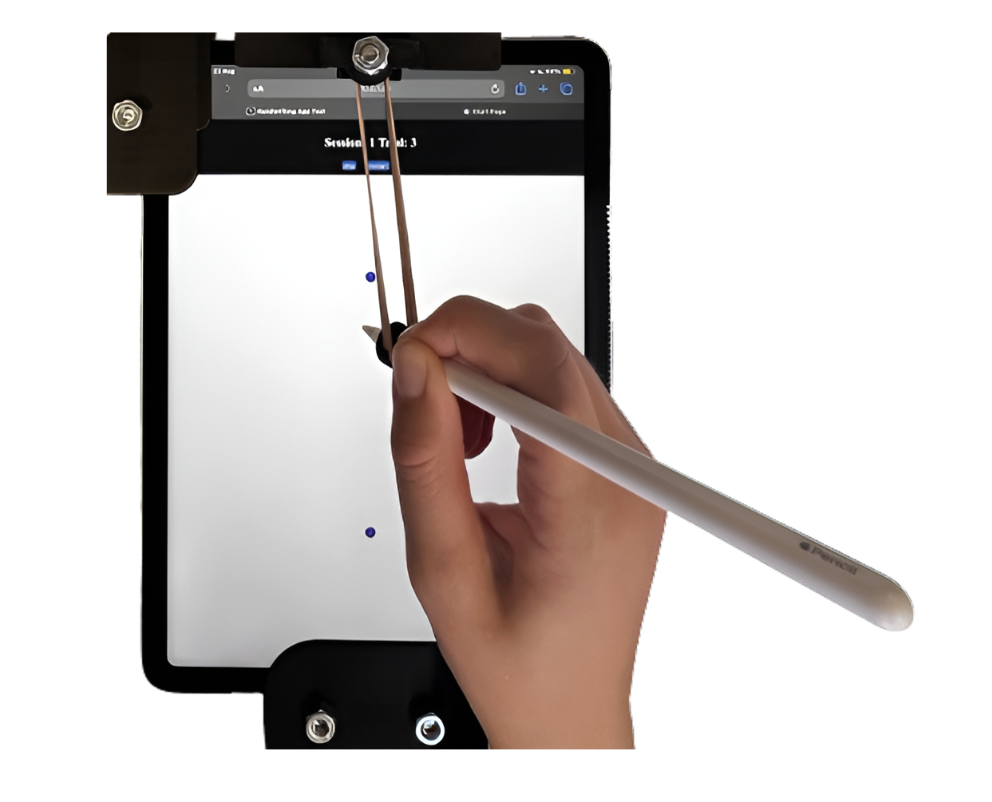
Iteration 1 — passive linkage
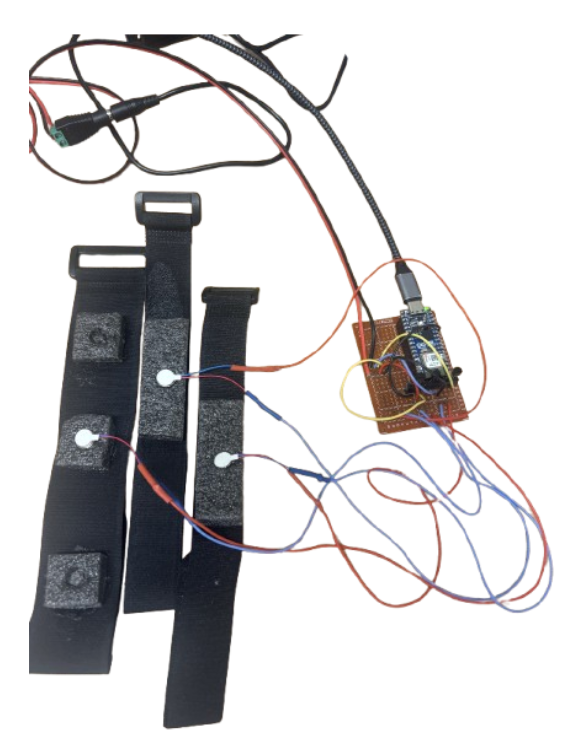
Iteration 2 — three-motor ERM wristband
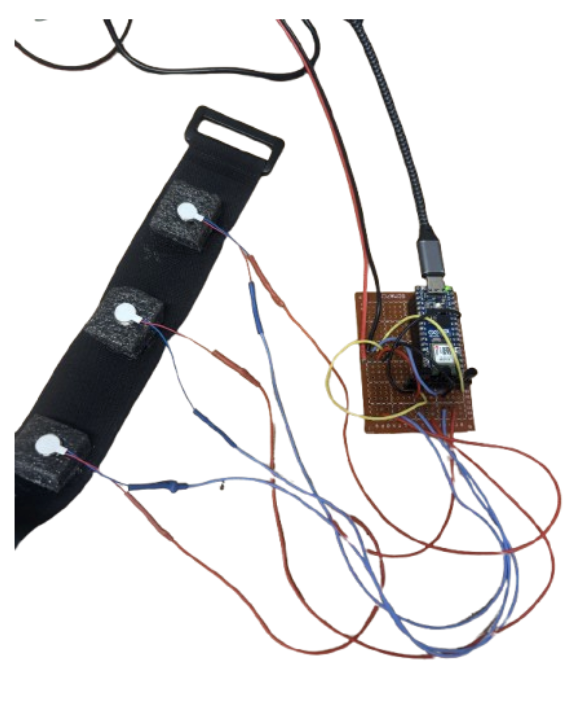
Iteration 2 — integration test
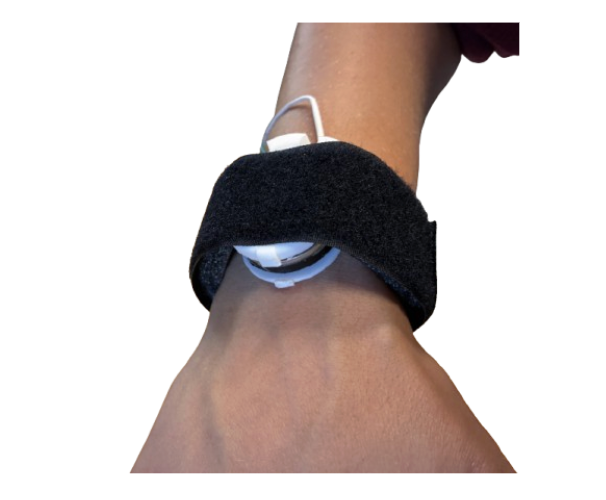
Iteration 3 — exciter wristband
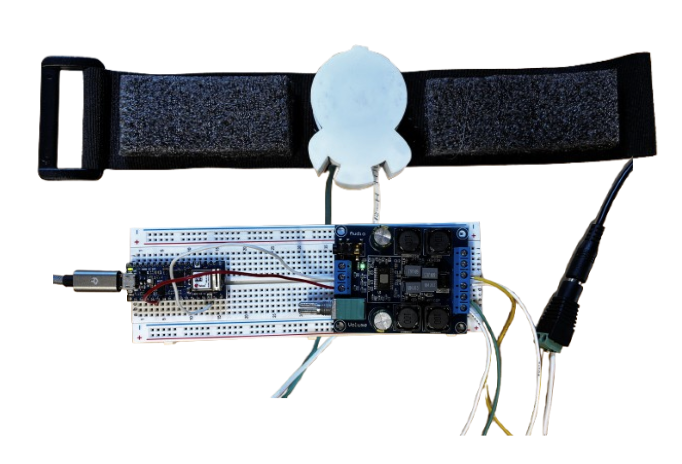
Iteration 3 — mounting detail
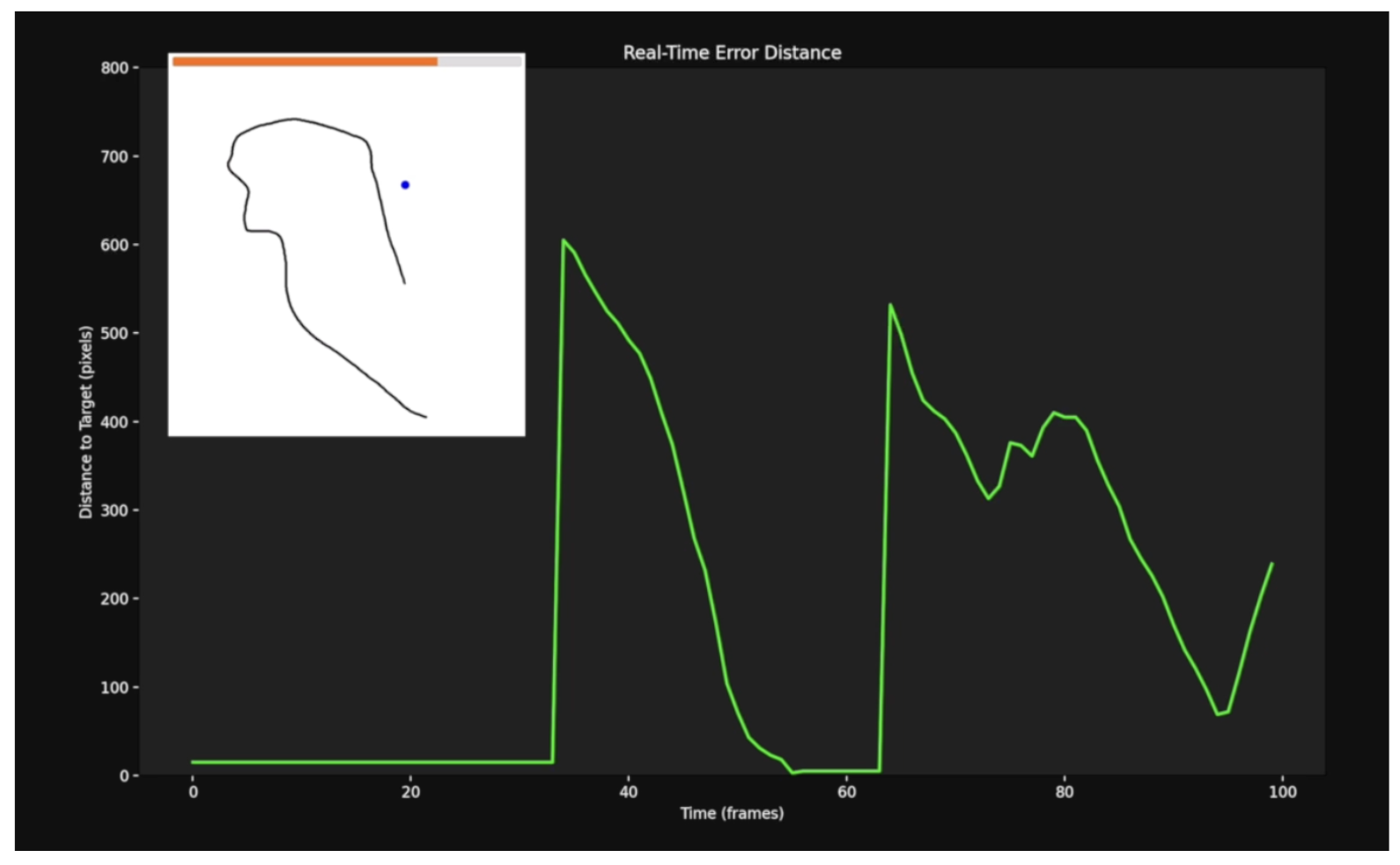
Iteration 3 — error tracking (illustrative example)
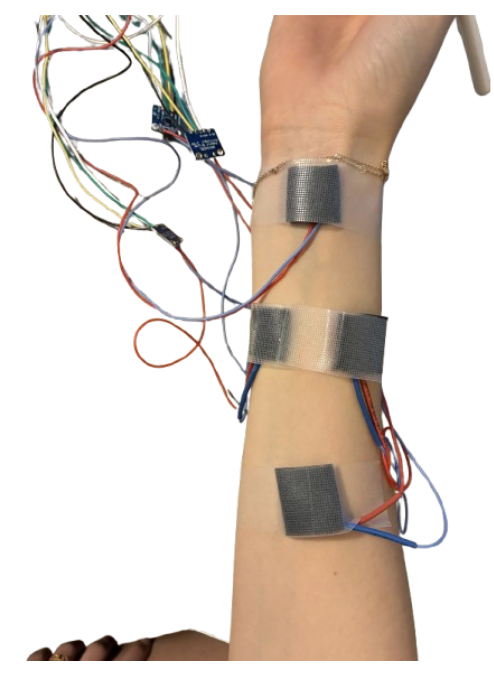
Iteration 4 — four-LRA array with I2C multiplexer
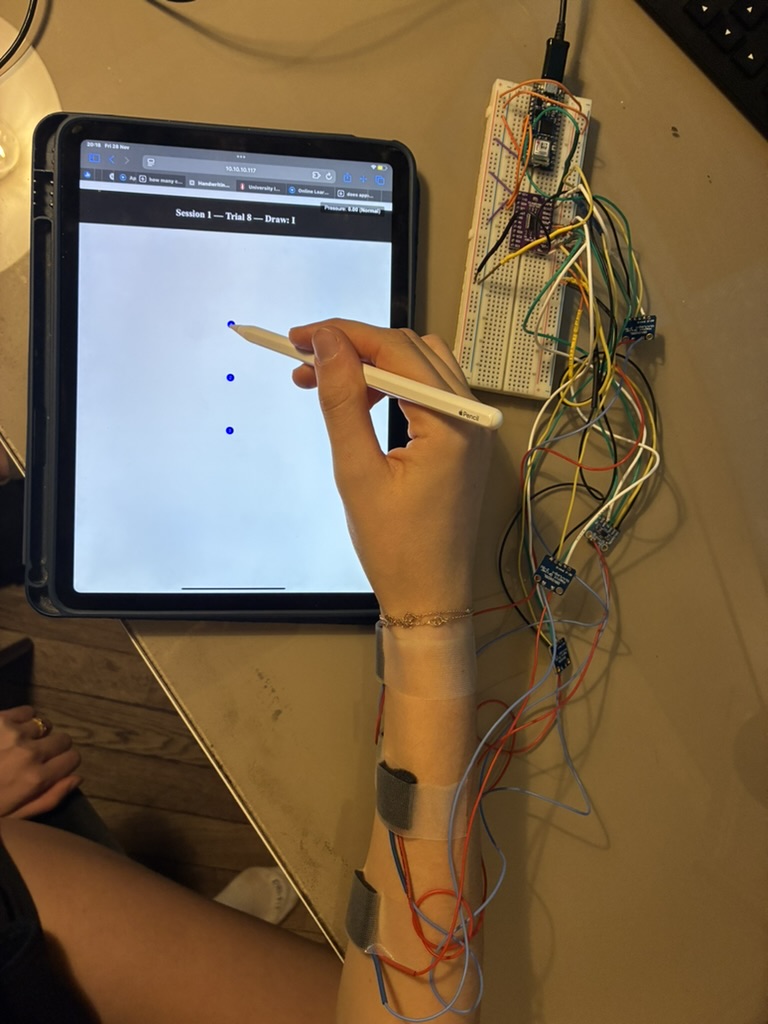
Iteration 4 — motor placement for N/S/E/W cues
Build
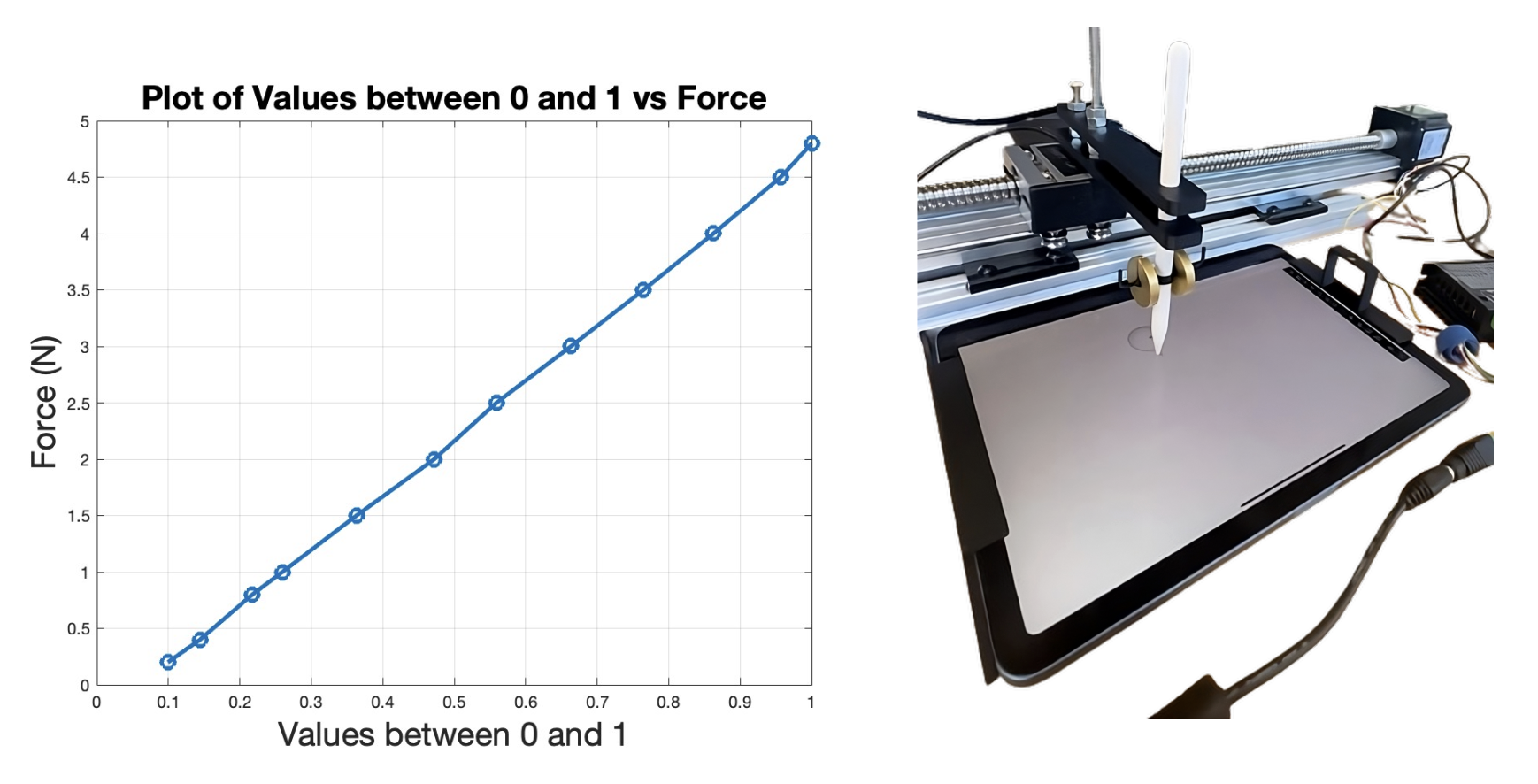
Force calibration — repeatable settings
Test & Results
• Passive: resistance only — no real-time error signal • ERM: 10 ms sequential patterns too weak to tell apart; buzz felt everywhere • Exciter: stronger output, but one actuator encodes distance, not direction • LRA: clean directional cues — activation timing, not actuator type, was the key variable
What Broke & What I Changed
Intensity alone couldn't encode direction, so the final design spreads actuators around the wrist and encodes direction in activation order.