Goal & Constraints
Build a motor-driven machine to push against a slowly separating platen, minimizing mass. Output target: 95.5 N, 964 N·s impulse.
My Role
Mechanism design, transmission analysis, FEA.
Hand Calculations
Motor set at ½ no-load speed (499 rad/s) / ½ stall torque at 2.5 V for 1.30 W peak power. 400:1 gearbox + Ø8 mm pinion → 5 mm/s rack velocity (matched to platen). Net motor torque amplified to 95.5 N at the platen. Transmission efficiency: gearbox η=0.334, rack-and-pinion η=0.96, overall 32.1%.
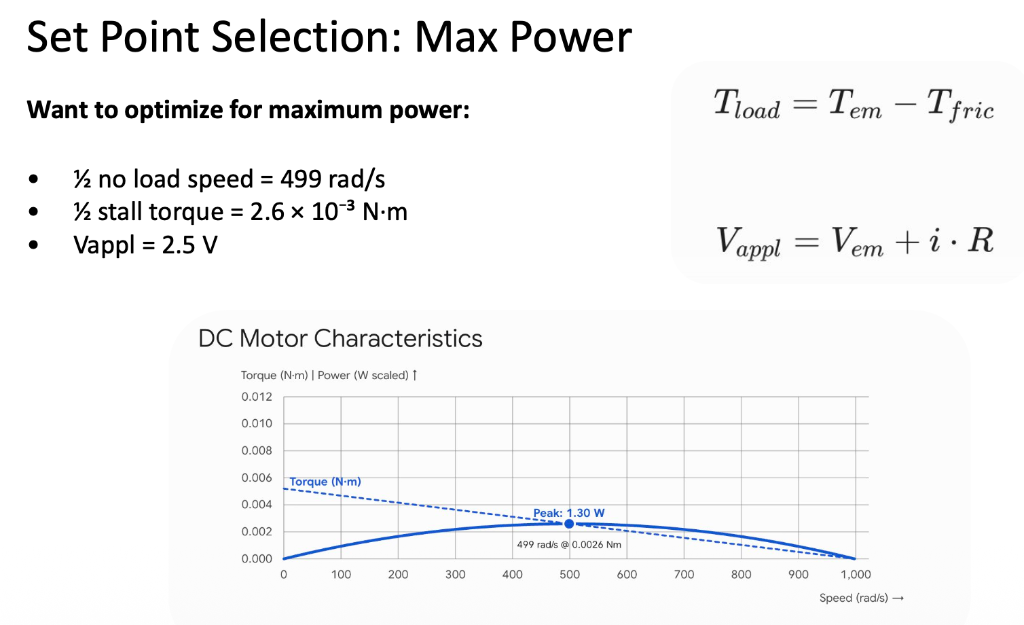
DC motor characteristics — peak power 1.30 W at 499 rad/s
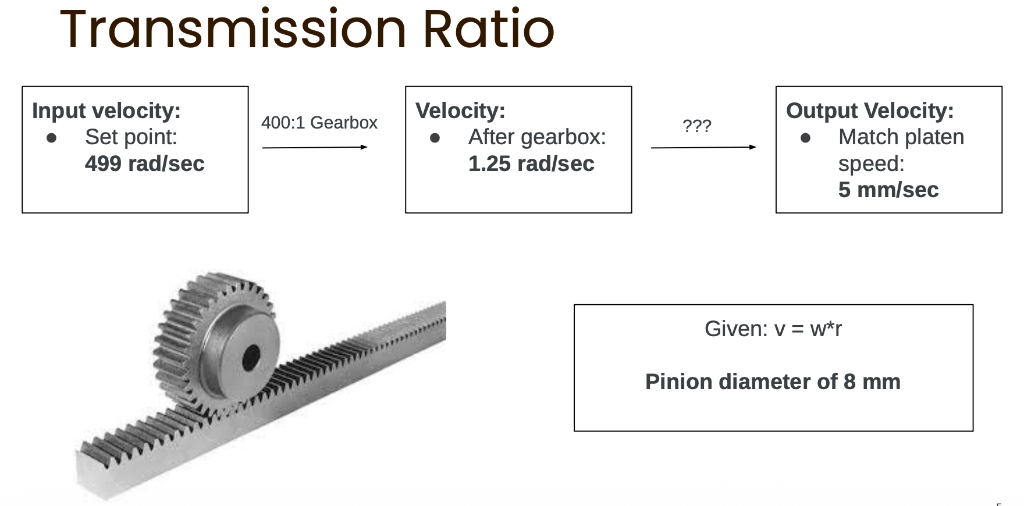
Transmission ratio — 400:1 gearbox, Ø8 mm pinion
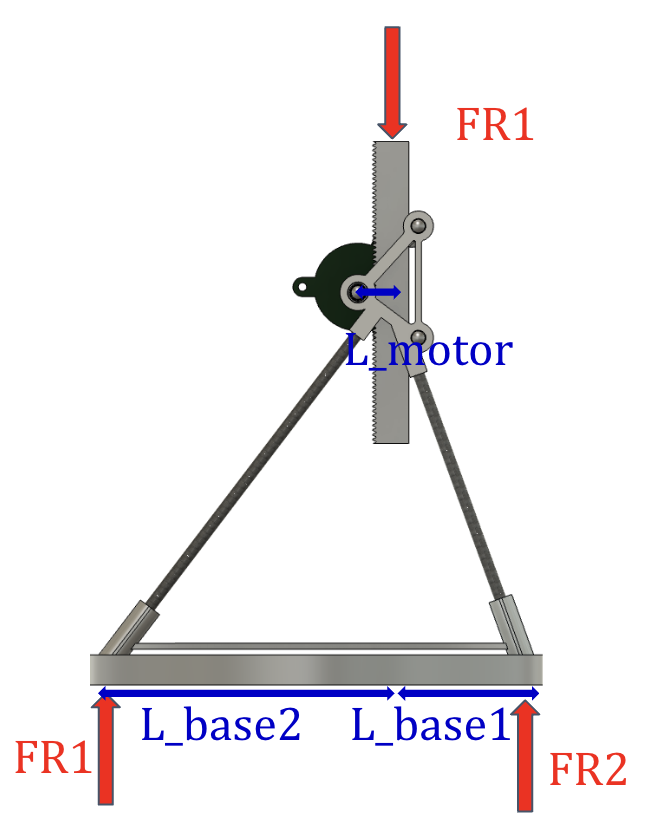
Overall FBD — platen load to base reactions
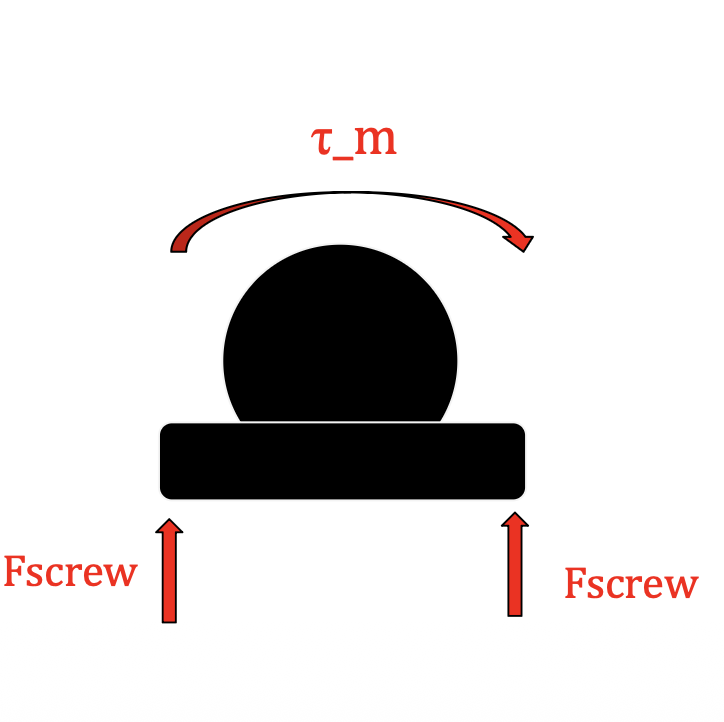
Motor FBD — τ_m balanced by screw reactions
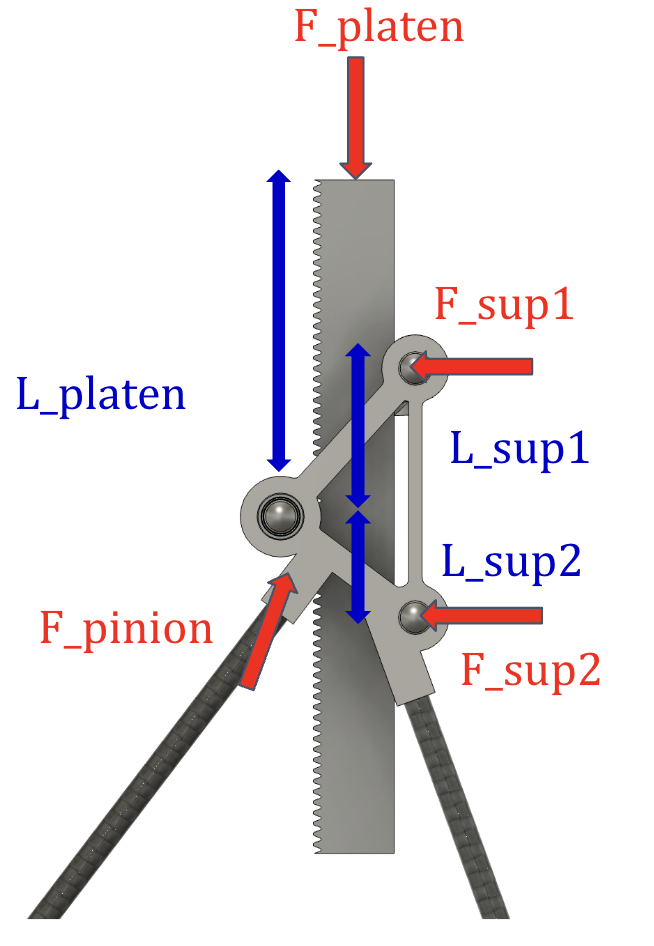
Rack FBD — F_platen, F_pinion, roller supports
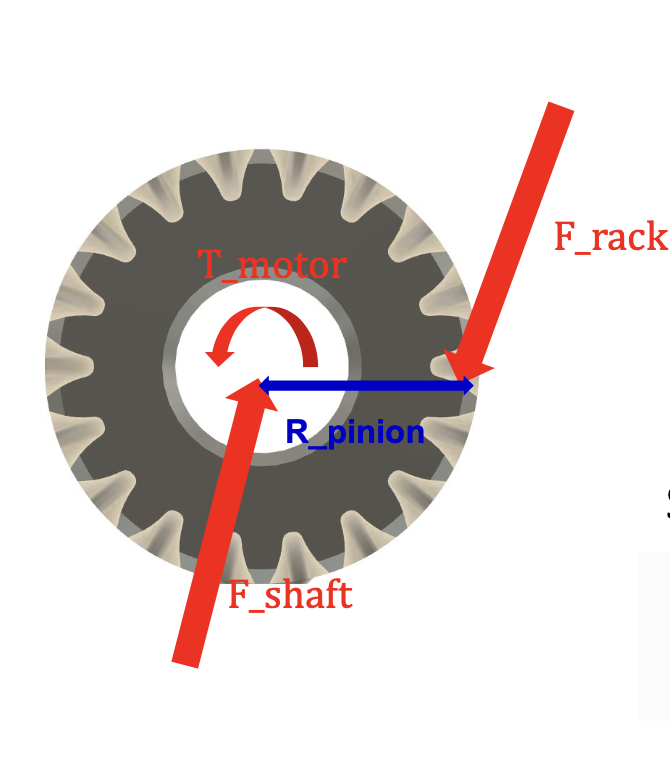
Pinion FBD — T_motor drives F_rack through R_pinion
Design & CAD
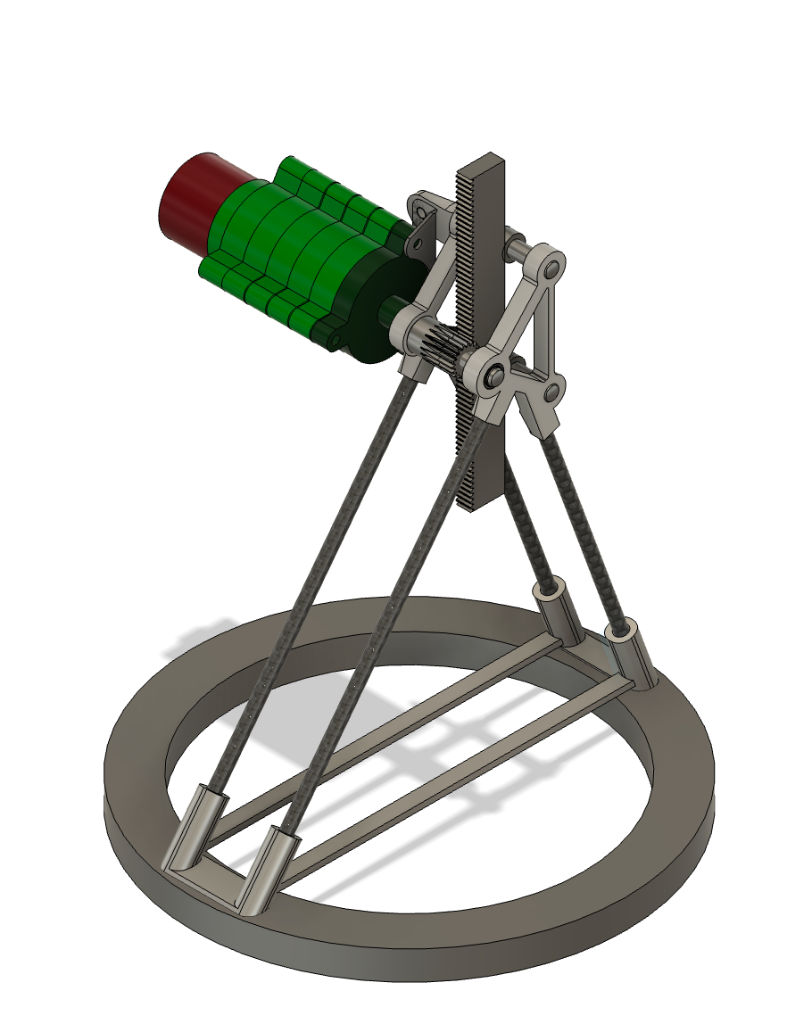
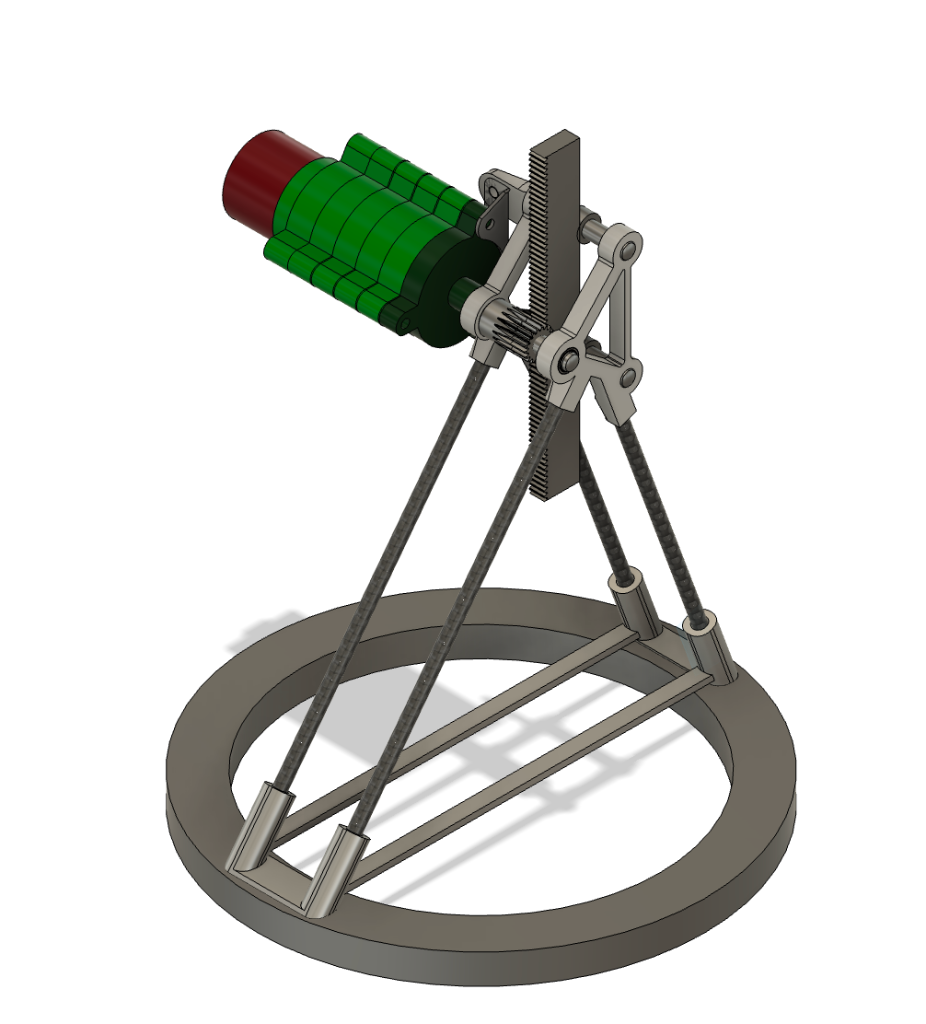
Full assembly CAD — A-frame, gearbox, motor, rack-and-pinion
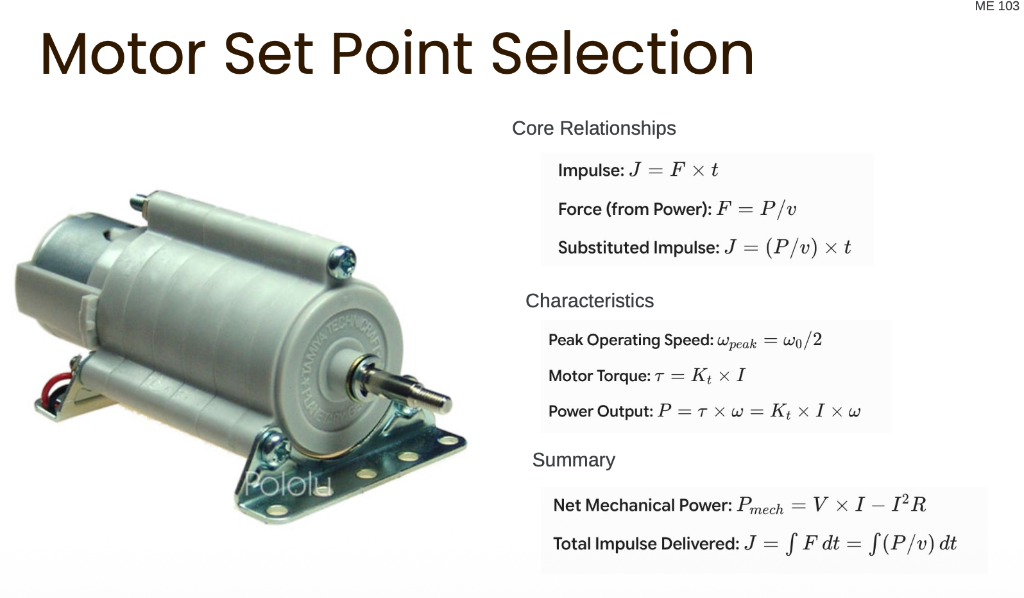
Pololu DC motor with 400:1 planetary gearbox
Motor atop the A-frame drives a vertical rack via pinion on the gearbox output shaft. All contact points (motor, pinion, rack, platen) are collinear to minimize off-axis forces.
Build
Carbon fiber legs, PLA connectors, steel rack and pinion, Pololu gearbox motor. Mounted in the MTS test machine.
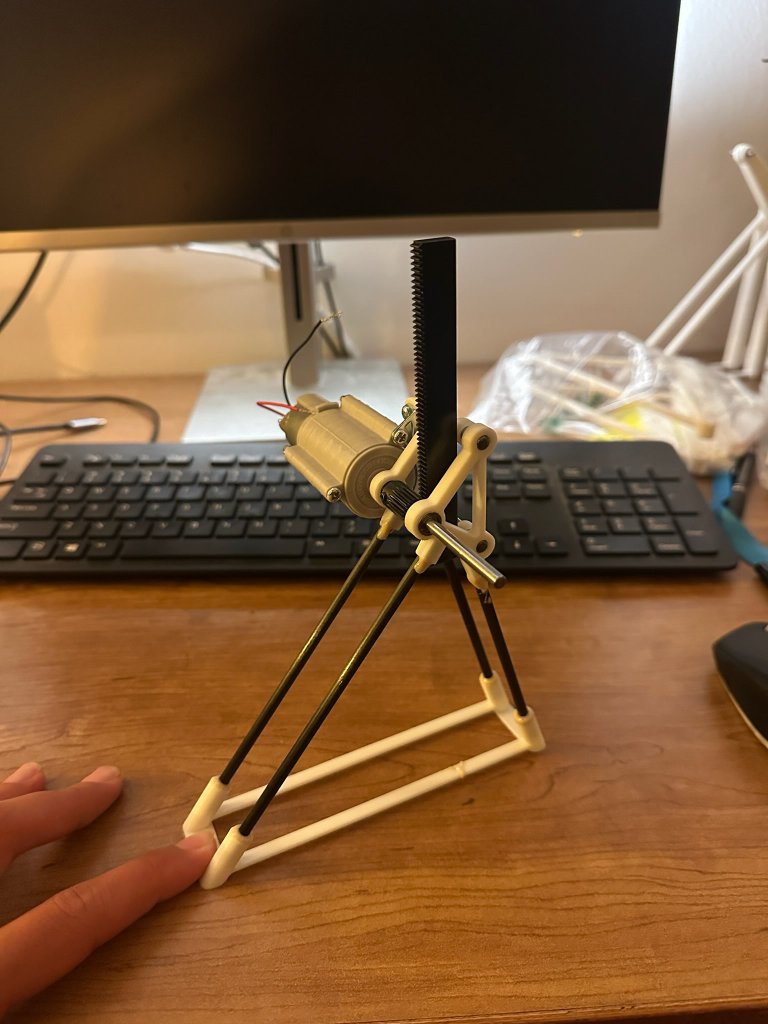
Finished assembly — carbon fiber legs, PLA joints, steel rack
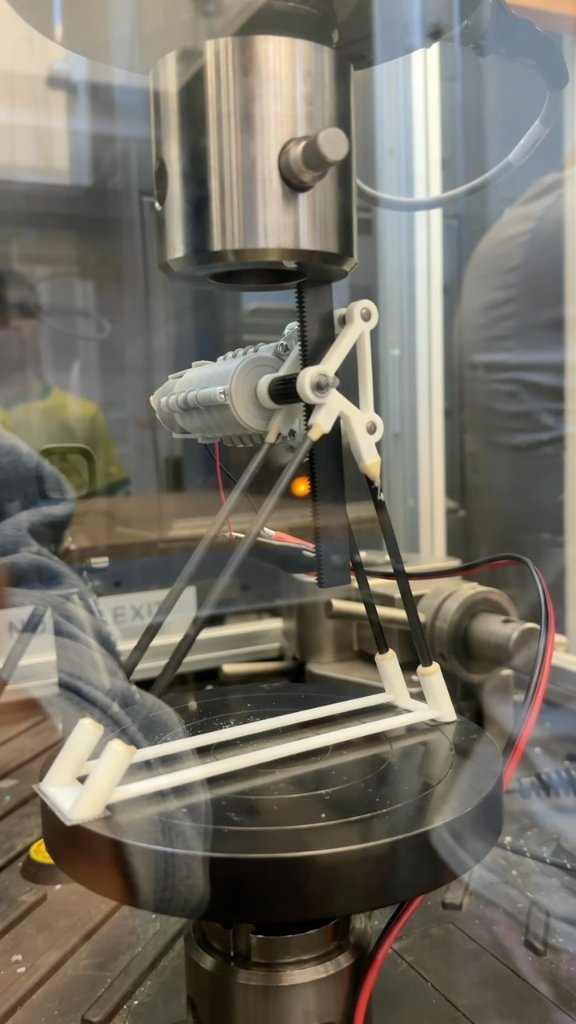
Mounted in the MTS test machine
Test & Results
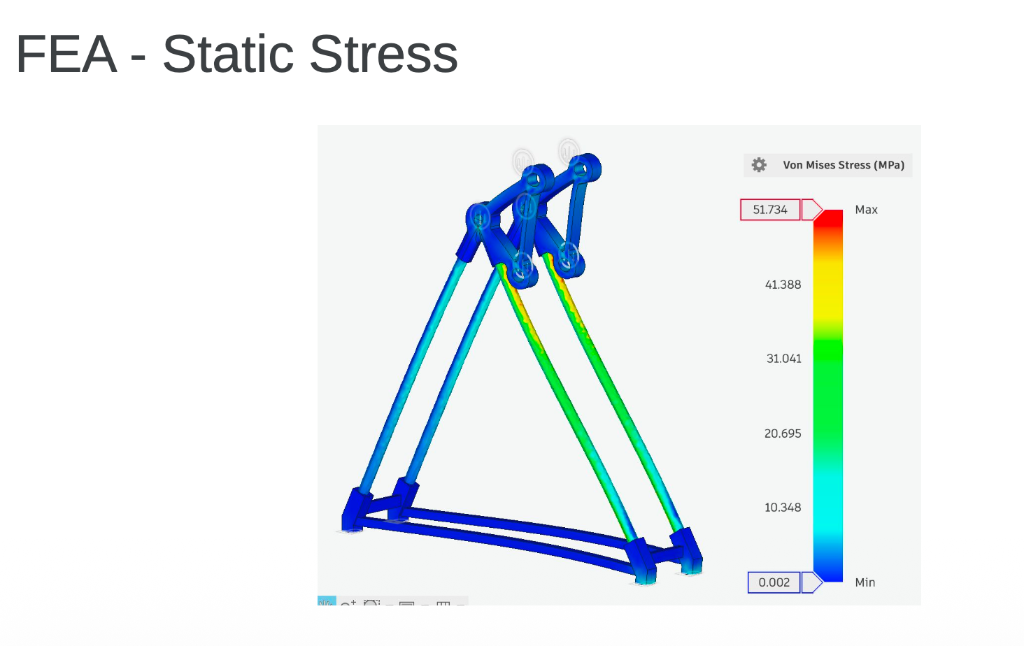
Von Mises — peak 51.7 MPa along carbon fiber legs
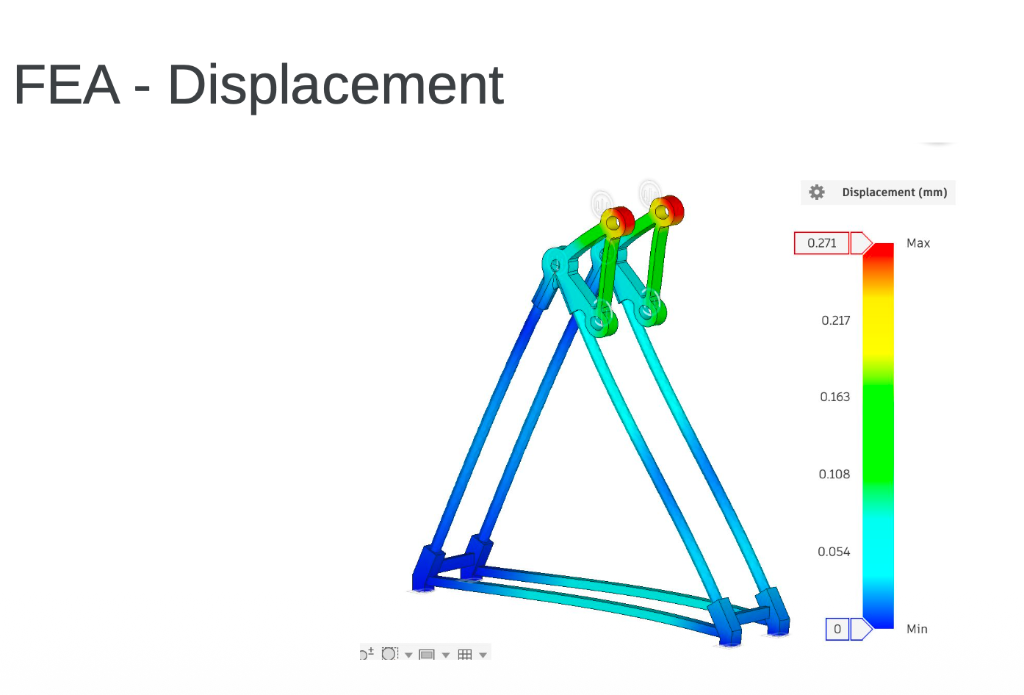
Displacement — max 0.271 mm at motor mount
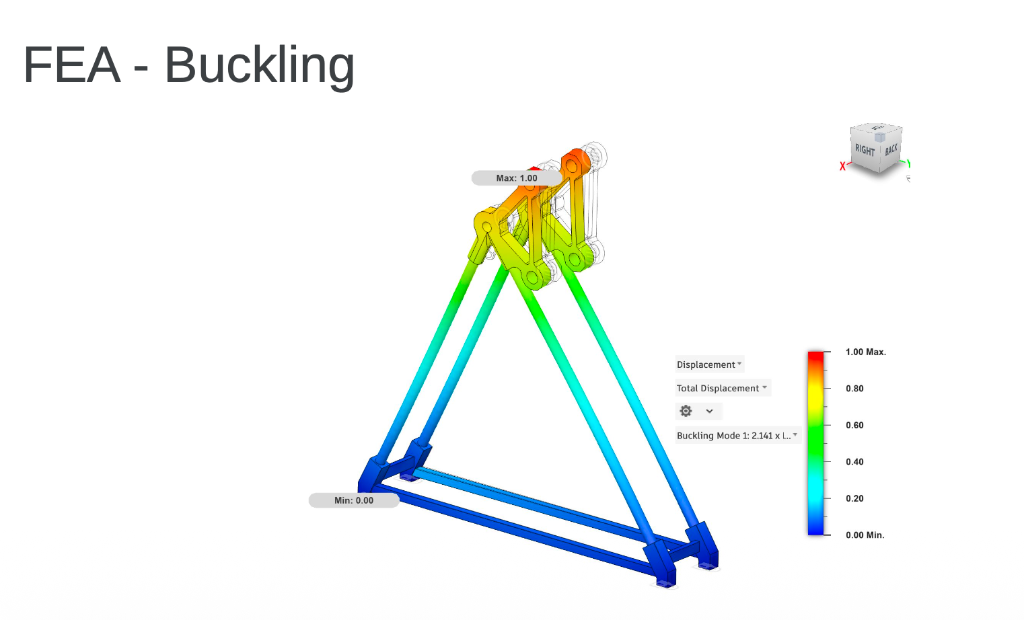
Buckling Mode 1 — BLF 2.141
FEA: Von Mises peak 51.7 MPa along the carbon fiber legs; max displacement 0.271 mm at the motor mount; buckling BLF 2.141 (symmetric leg column), matching the Euler hand calc within 1.3%.